Catacombs of St Callixtus · Appian Way · Rome
The Cemetery of the Early Church
Beneath the Appian Way run some twenty kilometres of galleries on several levels, where around half a million early Christians were laid to rest — among them nine popes and the martyr St Cecilia. The Catacombs of St Callixtus hold some of the oldest Christian art in Rome. Here is how to visit them, and how to tell them apart from Rome's other catacombs.
Two things people get wrong
Not a secret hiding place
The popular story that Christians hid in the catacombs to escape persecution is not true. Roman law, going back to the Twelve Tables, required all burials to take place outside the city walls, so Jews, pagans and Christians alike buried their dead beyond the walls — and Christian catacombs were legal, registered, communal cemeteries, known to the authorities. Christians favoured burial over cremation because of their belief in the resurrection of the body. The catacombs are a cemetery, not a hideout.
Not the Capuchin bone crypt
St Callixtus is often confused with the Capuchin Crypt, and they are entirely different places. The Capuchin Crypt, beneath the church of Santa Maria della Concezione on Via Veneto in the city centre, is a seventeenth-century chapel decorated with the bones of some 4,000 friars — a memento-mori ossuary, not a catacomb. St Callixtus is an ancient Christian cemetery on the Appian Way, from a different era and a different part of Rome. If you want the bone chapel, that's a separate visit.
The cemetery of the early Church
The cemetery of the early Church
The Church's own burial ground
The Catacombs of St Callixtus are among the largest and most important in Rome, and for a particular reason: at the start of the third century the deacon Callixtus was appointed by Pope Zephyrinus to administer this cemetery, and under him it became the official burial ground of the Church of Rome. Over the following centuries around half a million Christians were laid to rest here across some twenty kilometres of galleries dug on several levels into the soft volcanic tufa, reaching more than twenty metres underground.
Popes, a martyr, and the oldest Christian art
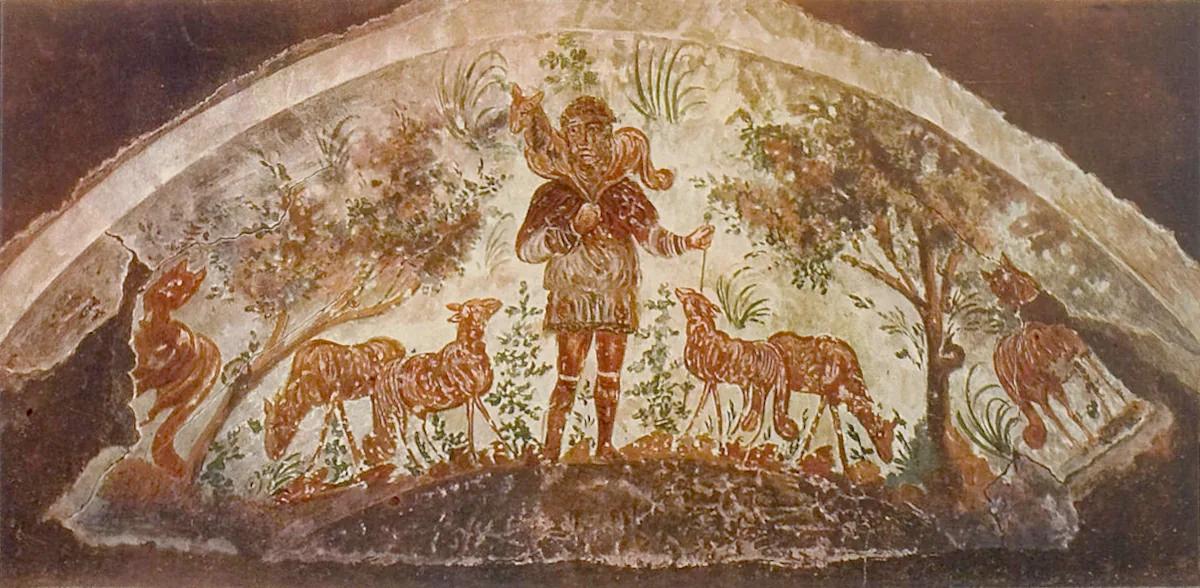
Two chambers give St Callixtus its standing. The Crypt of the Popes — nicknamed 'the little Vatican' — is the resting place of nine early popes, several with their original Greek inscriptions still legible on the walls. Nearby lies the Crypt of St Cecilia, the martyr and patron saint of music. And in the Cubicles of the Sacraments survive some of the oldest Christian frescoes in Rome, from the late second and early third centuries: the Good Shepherd, praying figures, fish and bread.
A place of prayer, still
This is a cemetery and a place of pilgrimage, cared for by the Pontifical Commission for Sacred Archaeology and run by the Salesians, and it remains in active religious use. Visiting it well means visiting it quietly and respectfully — not as a spectacle, but as one of the most moving windows there is onto the faith and the people of the early Church, in the very ground where they buried their dead.
the visit
The descent
A visit to St Callixtus is a short, guided descent into the galleries and back — about forty minutes underground, following your guide through part of the network. Here is the shape of it.
- I
Down into the galleries
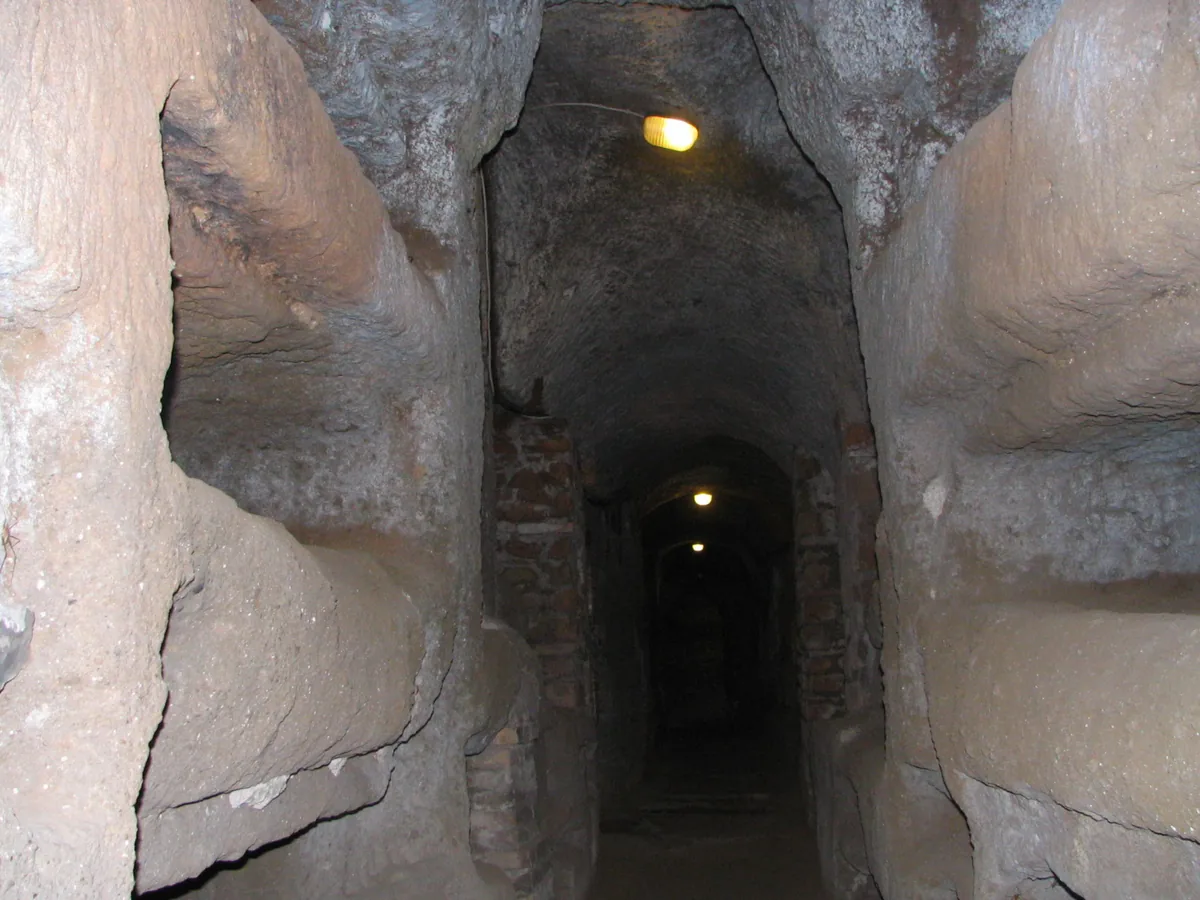
The visit begins with a descent of some fifty steps into the tunnels, where the air holds steady at around sixteen degrees and the light is low. Narrow corridors, about a metre wide, run in every direction, their walls lined floor to ceiling with loculi — the simple rectangular niches where bodies were laid. You stay with your guide; only a fraction of the twenty-kilometre network is on the route.
- II
The Crypt of the Popes
The heart of the tour is the Crypt of the Popes, the 'little Vatican,' where nine popes of the third century were buried. Several of their names survive in the original Greek, carved into the stone — Pontian, Anterus, Fabian, Lucius, Eutychian. It was here, too, that Pope Sixtus II was seized and killed while celebrating the liturgy in 258. It is a small, still, deeply venerated chamber.
- III
The Crypt of St Cecilia
A few steps away lies the Crypt of St Cecilia, the young Roman martyr and patron saint of music. A copy of Stefano Maderno's 1599 statue lies where her body was reportedly found, on her side; the original relics were moved to the basilica in Trastevere in the ninth century. Ninth-century paintings still mark the walls of the chamber.
- IV
The Cubicles of the Sacraments
The visit passes the Cubicles of the Sacraments, family chambers frescoed with some of the earliest Christian art in Rome — the Good Shepherd carrying a lamb, orants with arms raised in prayer, fish bearing a basket of bread as a sign of the Eucharist, Jonah as a symbol of resurrection. Then the climb back up the steps, into the light and the Appian Way.
before you go
How a visit works
St Callixtus is not a place you wander into and explore on your own. Knowing how the visit is run — and its limits — matters before you book.
Guided groups only
You can only visit with a guide, in a group, accompanied by the site's staff — there are no independent, self-guided visits. Tours start about every thirty minutes and last around forty minutes underground, running in several languages, commonly Italian, English, French, Spanish and German. You either join a group on arrival or book a tour that includes the guided entry.
Outside the centre
The catacombs sit on the Appian Way, outside Rome's historic centre. Bus 118 (from the Colosseo or Circo Massimo) stops at the St Callixtus gate, and bus 218 (from San Giovanni) stops opposite; otherwise many visitors book a tour that includes round-trip transport, which is much of what a tour's price pays for. Budget travel time each way.
Closed days and dress
The site is closed on Wednesdays, for a winter period of a few weeks each year (roughly mid-January to mid-February, with dates that change annually), and on major feast days. Modest dress and quiet, respectful conduct are expected — this is an active religious and pilgrimage site. Photography and video are not permitted inside, out of respect and for preservation.
Is it right for you?
The tour involves around fifty uneven steps down and back up, narrow corridors, no seating and no lift, and it is not wheelchair accessible. The air is cool and damp, so bring a layer. It is a remarkable, moving visit for most people, but it is not advisable for those with serious claustrophobia or limited mobility, and you should know that going in rather than discover it underground.
What you'll see below
What you'll see below
Within the part of the network open to visitors, a handful of chambers and features carry the meaning of the place.
The 'little Vatican'
The most venerated chamber, where nine early popes were buried, several of their names still legible in the original Greek carved into the stone. A small, quiet room at the heart of the cemetery, and the reason St Callixtus is called the official burial place of the early Church.
The patron saint of music
The chamber where the martyr St Cecilia was entombed before her relics were moved to Trastevere in the ninth century. A copy of Maderno's 1599 statue lies where her body was reportedly found, and ninth-century paintings survive on the walls.
The oldest Christian art
The Cubicles of the Sacraments — family chambers frescoed in the late second and early third centuries with the Good Shepherd, praying figures, and fish carrying bread. Among the earliest Christian images anywhere, painted by a community burying its dead in hope of resurrection.
Loculi in the tufa
Kilometres of narrow corridors carved into soft volcanic tufa, their walls lined with loculi — plain rectangular niches, stacked in rows, where rich and poor were buried side by side. The scale of them, even on the short visitor route, is quietly overwhelming.
Fish, shepherd, anchor
The catacombs are covered in the visual language of the first Christians: the fish (an acrostic for Christ), the Good Shepherd, the anchor of hope, the orant figure with arms outstretched, Jonah and the whale as a promise of resurrection. Your guide reads these for you as you pass.
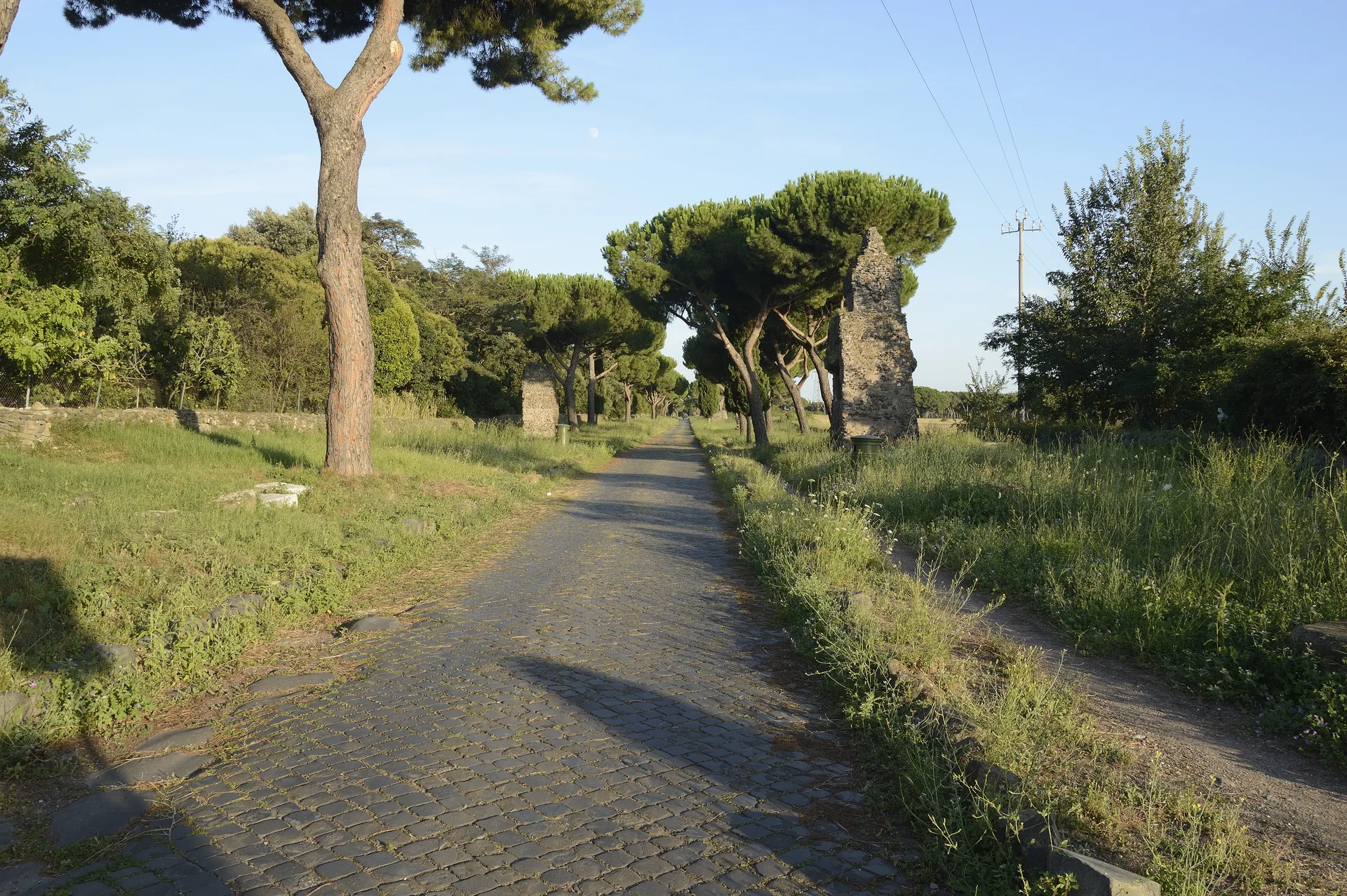
The queen of roads
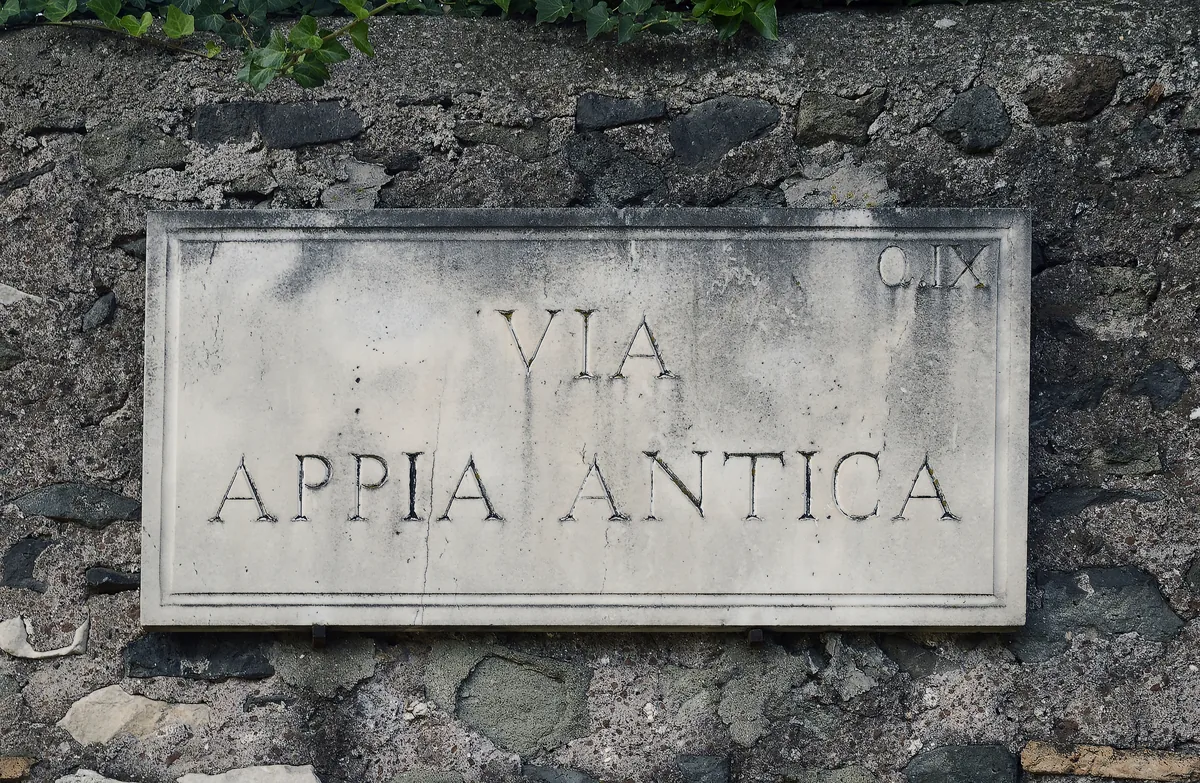
Above ground, the Via Appia Antica — Rome's great southern road, the 'queen of roads,' lined with ancient tombs and monuments, the classic setting for these cemeteries. Many tours pair the catacombs with a walk along its old basalt paving.
Which of Rome's catacombs?
Which of Rome's catacombs?
| St Callixtus | San Sebastiano | Domitilla | |
|---|---|---|---|
| Best for | Scale & Church history | A quieter, smaller visit | Early art & calm |
| The draw | Crypt of the Popes, St Cecilia | Where the word 'catacomb' began | Rare frescoes, a Last Supper scene |
| Feel | The heavyweight; busier in season | Less touristy | Intimate, usually quietest |
| Where | Appian Way, no. 110 | Further along the Appian Way | Off the Via delle Sette Chiese |
| Note | The official early-Church cemetery | Often paired with St Callixtus | The pick for art lovers |
when to go
When to go
The catacombs are underground and cool year-round, so season matters less here than the closed days — but a few things help.
Mind the closed days
Before anything else, check the calendar: St Callixtus is closed on Wednesdays, for a winter period of a few weeks (roughly mid-January to mid-February, dates varying by year), and on 1 January, Easter Sunday and 25 December. More visitors are caught out by a Wednesday closure than by anything else, so confirm the day before you plan around it.
Spring and autumn above ground
Underground it's a steady sixteen degrees whatever the month, but you'll be on the Appian Way before and after, so spring and autumn — April to June, September to October — are the most pleasant times to combine the visit with a walk along the ancient road. Summer is hot above ground but the cool of the galleries is a welcome relief.
Time of day
The site opens 9 to 12 in the morning and 2 to 5 in the afternoon, with a midday break, so plan around those windows. Earlier in the day tends to be quieter than the after-lunch slots in high season; a morning visit also leaves the afternoon free for the rest of the Appian Way or the return to the centre.
Dress for underground and for a church
Two reasons to dress with a little care: the galleries are cool and damp, so bring a layer even in a Roman summer; and this is a religious site, so modest dress and quiet are expected. Comfortable shoes help with the fifty-odd uneven steps, and remember that photography is not allowed inside.
St Callixtus, in pictures
St Callixtus, in pictures
Catacombs tours
Find a catacombs tour for your dates
Every tour below is bookable through GetYourGuide, with live availability and the final price shown in your own currency before you book — a guided visit, in your language, often with transport out to the Appian Way included.
Planning your visit
Planning your visit
Book a guided visit
There is no way to see St Callixtus except with a guide, in a group, so your only real choice is whether to join a group on arrival or book a tour that includes the guided entry. A booked tour secures your time and your language, and — crucially, given the location — usually adds round-trip transport out to the Appian Way. Groups run about every half hour and fill in high season, so booking ahead is sensible.
Getting there
The catacombs are on the Appian Way, outside the historic centre. If you're travelling independently, bus 118 from the Colosseo or Circo Massimo stops at the St Callixtus gate, and bus 218 from San Giovanni stops opposite. If you'd rather not navigate the buses, a tour with transport is the simplest option, and the Appian Way's own beauty makes the journey part of the visit.
Or make it a catacombs comparison
If you have the appetite for more than one, the Appian Way holds several catacombs. St Callixtus is the heavyweight for scale and Church history; San Sebastiano, a little further along, is smaller and where the word 'catacomb' was coined; Domitilla, nearby, is quieter and prized for its early frescoes. Some tours combine two. One is plenty for most visitors — but know that the others are there, and different in character.
Know what to expect underground
Set your expectations before you descend: around fifty uneven steps down and back, narrow metre-wide corridors, cool damp air at a constant sixteen degrees, no seating, no lift, and no photography. It is not wheelchair accessible and not advisable for serious claustrophobia. For most people it is a moving forty minutes; going in prepared for the physical side makes it a better one.
Visit with respect
Above all, remember what this is: the resting place of half a million people, an active place of prayer and pilgrimage. Dress modestly, speak quietly, stay with your guide, and approach it as you would any cemetery or church. Treated that way, St Callixtus is one of the most affecting hours in Rome — a direct, human encounter with the earliest Christians, in the ground where they laid their dead.
Planning a catacombs visit
Planning a catacombs visit
Which of Rome's Catacombs Should You Visit?
St Callixtus, San Sebastiano and Domitilla compared — plus why the Capuchin bone crypt is a different place entirely.
Read more →THE MYTHWere the Catacombs Secret Hiding Places? No.
The persistent story that Christians hid underground to escape Rome — and what the catacombs actually were.
Read more →THE HEART OF ITThe Crypt of the Popes: the 'Little Vatican'
The most venerated chamber in St Callixtus — nine popes, Greek inscriptions on the stone, and a martyrdom in 258.
Read more →GETTING THEREGetting to the Catacombs on the Appian Way
St Callixtus sits outside the centre — the buses that reach it, the tour-with-transport option, and the road itself.
Read more →THE ARTThe Earliest Christian Art, Underground
The Good Shepherd, the fish, the orant and Jonah — reading the frescoes and symbols in the Cubicles of the Sacraments.
Read more →HOW TO VISITVisiting the Catacombs with Respect
A cemetery and a place of prayer — the etiquette, the practicalities underground, and what to expect on a guided visit.
Read more →questions
Visiting the catacombs
Did Christians hide in the catacombs?
No — this is a persistent myth. Roman law, going back to the Twelve Tables, required all burials to take place outside the city walls, so everyone — Jews, pagans and Christians — buried their dead beyond the walls, and the Christian catacombs were legal, registered, communal cemeteries known to the authorities, not secret hiding places. Christians preferred burial to cremation because of their belief in the resurrection of the body. St Callixtus is a cemetery and a place of prayer, and understanding that is part of visiting it well.
Is St Callixtus the same as the Capuchin bone crypt?
No, and it's a common mix-up. The Capuchin Crypt, beneath the church of Santa Maria della Concezione on Via Veneto in central Rome, is a seventeenth-century chapel decorated with the bones of around 4,000 Capuchin friars — a memento-mori ossuary. St Callixtus is an ancient Christian cemetery on the Appian Way, from a completely different era and part of the city. If it's the bone chapel you're after, that's a separate site and a separate visit; this guide is about the Appian Way catacombs.
Do I need a guide, or can I visit on my own?
You can only visit with a guide. The catacombs are seen in groups accompanied by the site's staff — there are no independent, self-guided visits — with tours starting about every half hour, lasting around forty minutes, and running in several languages including English. You either join a guided group when you arrive or book a tour that includes the guided entry; the latter secures your time slot and your language, and usually adds transport out to the Appian Way.
How do I get there, and how long does it take?
St Callixtus is on the Appian Way, outside Rome's historic centre. By public transport, bus 118 from the Colosseo or Circo Massimo stops at the gate, and bus 218 from San Giovanni stops opposite; allow travel time each way. Many visitors book a tour that includes round-trip transport, which removes the navigation and makes the Appian Way part of the experience. The underground visit itself is about forty minutes, so a half-day covers the round trip comfortably.
Is it suitable for everyone, and can I take photos?
It's not for everyone physically. The visit involves around fifty uneven steps down and back, narrow corridors about a metre wide, no seating and no lift, and it is not wheelchair accessible or advisable for those with serious claustrophobia or limited mobility. The air underground is cool and damp at a constant sixteen degrees, so bring a layer. Photography and video are not permitted inside, out of respect and for preservation, and modest dress and quiet conduct are expected throughout — it remains an active cemetery and place of pilgrimage.